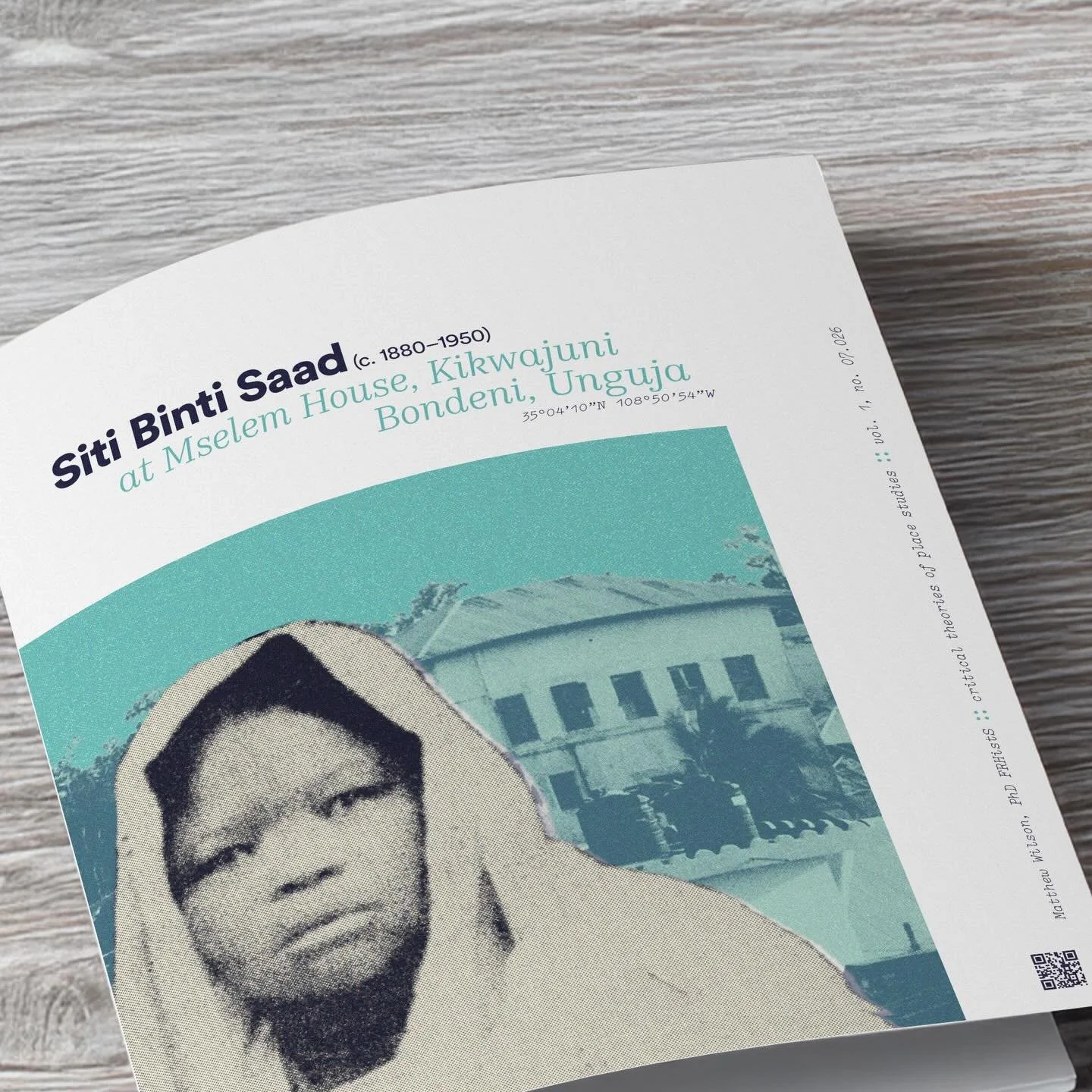
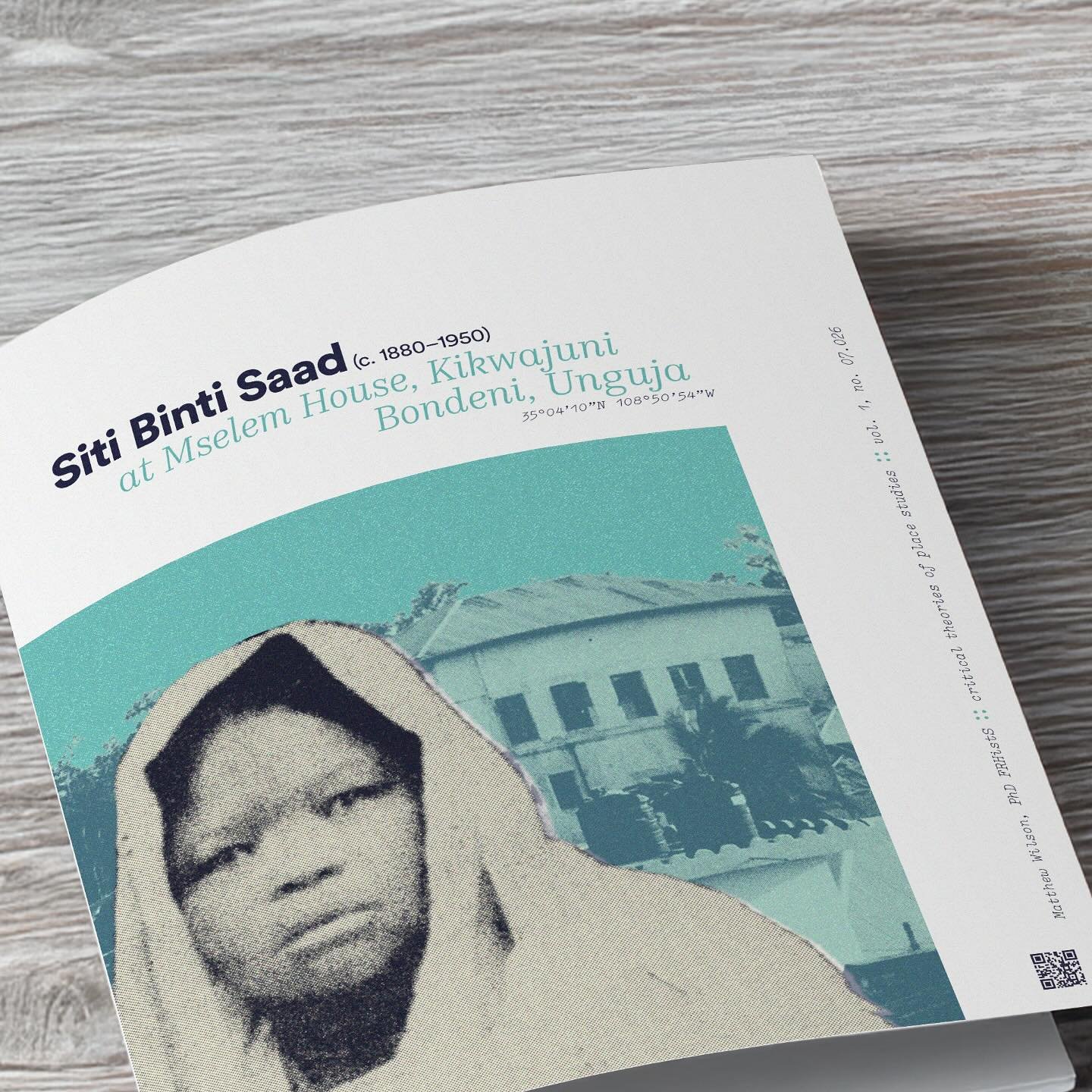
Mkono mmoja is inspired by the songs of the legendary taraab singer and anti-colonial womanist, Siti Binti Saad (1880–1950)
www.critical-theories-of-place-studies.org
lyrics
Mkono mmoja haumlei mtoto.
Mkono mmoja hauhifadhi miti.
Mkono mmoja haumlei mtoto.
Mkono mmoja hauhifadhi miti.
Leo ni siku
Ibariki Tanzania
Leo ni siku
Ibariki Tanzania
One hand does not raise a child. Mkono mmoja haumlei mtoto.
One hand does not save the trees. Mkono mmoja hauhifadhi miti.
Mkono mmoja haufanyi mwili.
Mkono mmoja hauhifadhi bahari.
Mkono mmoja haufanyi mwili.
Mkono mmoja hauhifadhi bahari.
Leo ni siku
Ibariki Tanzania
Leo ni siku
Ibariki Tanzania
Mkono mmoja haufanyi usawa. One hand does not make a body.
Mkono mmoja hauhifadhi mwambao. One hand does not save the seas.
Leo ni siku
Ibariki Tanzania
Leo ni siku
Ibariki Tanzania
One hand does not create harmony.
One hand does not save the shores.
Today is the day, today is the day.
We are together
Ibariki Afrika
Tuko pamoja
credits
released October 7, 2025
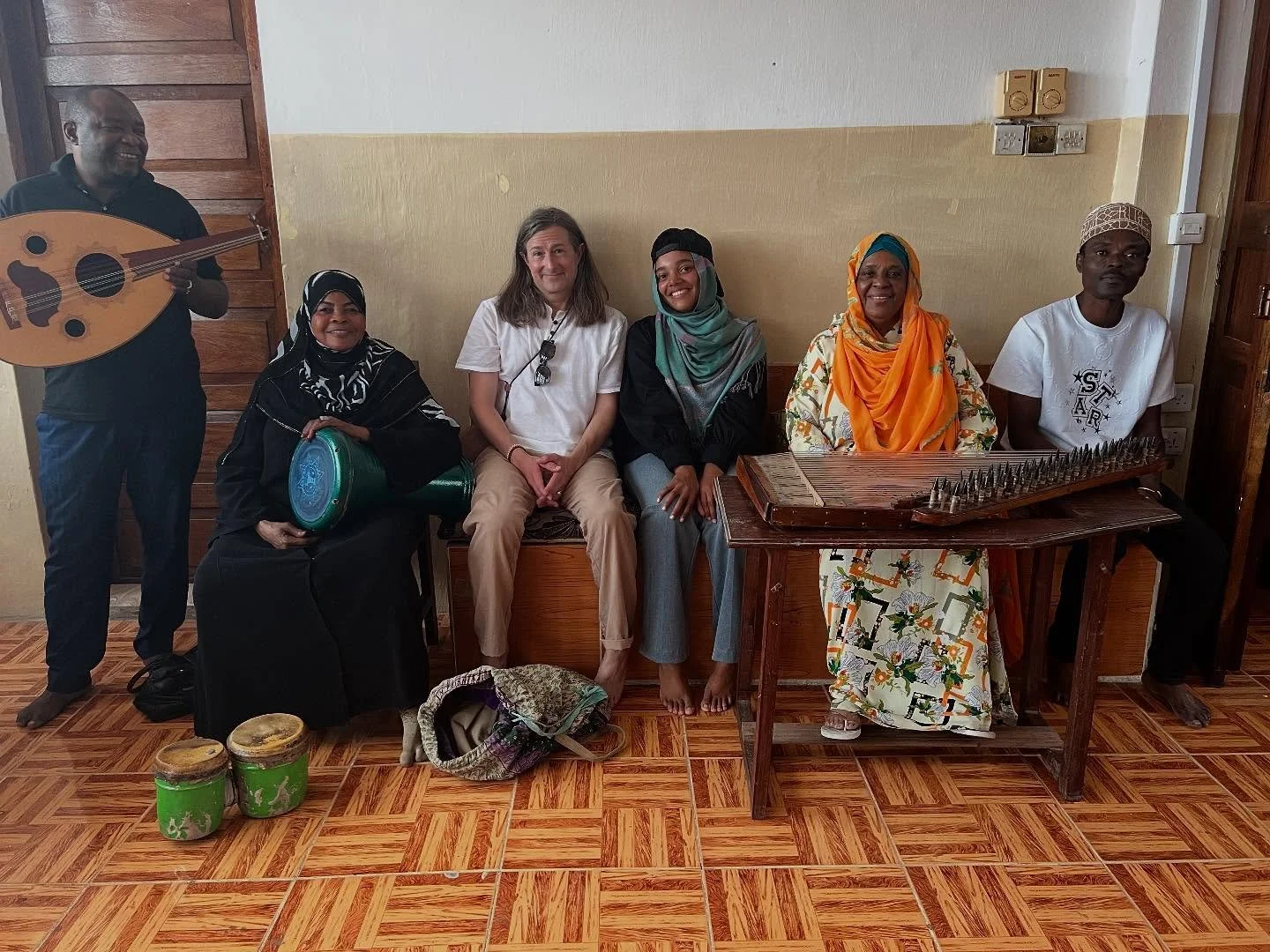
“Mkono mmoja” is the joint creation of SIT Fulbright-Hays group Bola Origunwa and Matthew Wilson. They worked in collaboration with Tanzanian taarab musicians affiliated to the world-renowned Dhow Countries Music Academy: Mariam Hamdani, Mohamed Othman Faki, Sharia Isa, and Ali Al Ibrahim. The inspiration for “Mkono mmoja” is threefold. First, it draws on the anti-colonial tradition of the legendary taarab singer-activist Siti Binti Saad (1880–1950). The song thus pays homage to the use of taarab music and other Tanzanian cultural productions in legitimizing the framing and claim-making of ‘recognition justice’, or who and what is given respect and valued in society. Secondly, it draws on the historical scholarship of Kelly Askew and Laura Fair. They scholarship demonstrates how taarab and Saad's lyrics in particular convey vivid phenomenological scenes, rhetorical constructs, or metaphorical spaces. The melodic words and phrases relay such covert expressions to challenge social and environmental oppression while putting emphasis on the collective good. The group drew on these sources of inspiration to construct a song with lyrics that set off with the Tanzanian proverb ‘Mkono mmoja haumlei mtoto’ or ‘One hand does not raise a child’. The song relays the importance of employing art to relink social, environmental, and perceptive ecologies by opening meaningful conversations that address our problems in a collective manner.
School of International Training, Fulbright-Hays project.
Artifact #1 :: Creativity + Expression
Recorded in Stone Town Tanzania, Jul 6 2025
www.critical-theories-of-place-studies.org
bibliography
Askew, Kelly M. Performing the Nation: Swahili Music and Cultural Politics in Tanzania. Chicago: University of Chicago Press, 2002.
Fair, Laura. Pastimes and Politics. Culture, Community, and Identity in Post-Abolition Urban Zanzibar, 1890–1945. Athens: Ohio State University Press, 2001.